

THE BEGINNING
My name is Elvin Lim, and I have collected yo-yos since 1999. My first was a Playmaxx ProYo II, purchased by my parents. It came with a VIDeYO cassette containing trick tutorials. Learning from videotape required considerably more patience than learning online. There was no progress bar or scrub function. Finding a particular trick meant repeatedly stopping, rewinding and fast-forwarding until the correct section appeared. Fortunately, responsive yo-yo play was much simpler then.


The first trick I learned was Around the World. It also became the first trick to break both my string and my yo-yo. My next acquisition was the Playmaxx Cold Fusion ProYo, one of the premium yo-yos of its era. I thought it was so beautiful that I was afraid to play with it. That exact yo-yo remains in pristine condition within my collection today. The collection has since grown to include influential releases from the formative years of modern yo-yo design, including models by Yomega, Tom Kuhn, Duncan and Spintastics. It began with a videotape and a broken ProYo II.
THE UNRESPONSIVE ERA
Unresponsive play changed what a yo-yo could do.
Players such as Paul Escolar and Spencer Berry developed tricks and combinations that would have been impossible with traditional responsive equipment. André Boulay's Expert Village tutorials made increasingly complex play accessible to a much wider audience. As the style evolved, manufacturers began experimenting more seriously with shape, dimensions and weight distribution. Yo-yos developed individual movement signatures rather than differing only in appearance.
Several models from this period had a lasting influence on me: the CLYW Peak and Wooly Marmot, the Anti-Yo Bapezilla and the One Drop Project. They also demonstrated that presentation could become part of a yo-yo's identity. Painted Peaks and Doing Stuff Wooly Marmots combined distinctive artwork with memorable packaging, while brands such as Crucial, Dif-E-Yo and ILoveYoYo developed passionate followings of their own. Limited releases on YoYoNation created an entirely different kind of contest. Collectors waited at their computers for fastest-fingers-first drops, hoping to complete checkout before the stock disappeared.
Some of those yo-yos now occupy the upper shelves of my collection.

BAPEZILLA

PEAK

PROJECT

WOOLY MARKMONT
EVOLUTION OF DESIGN
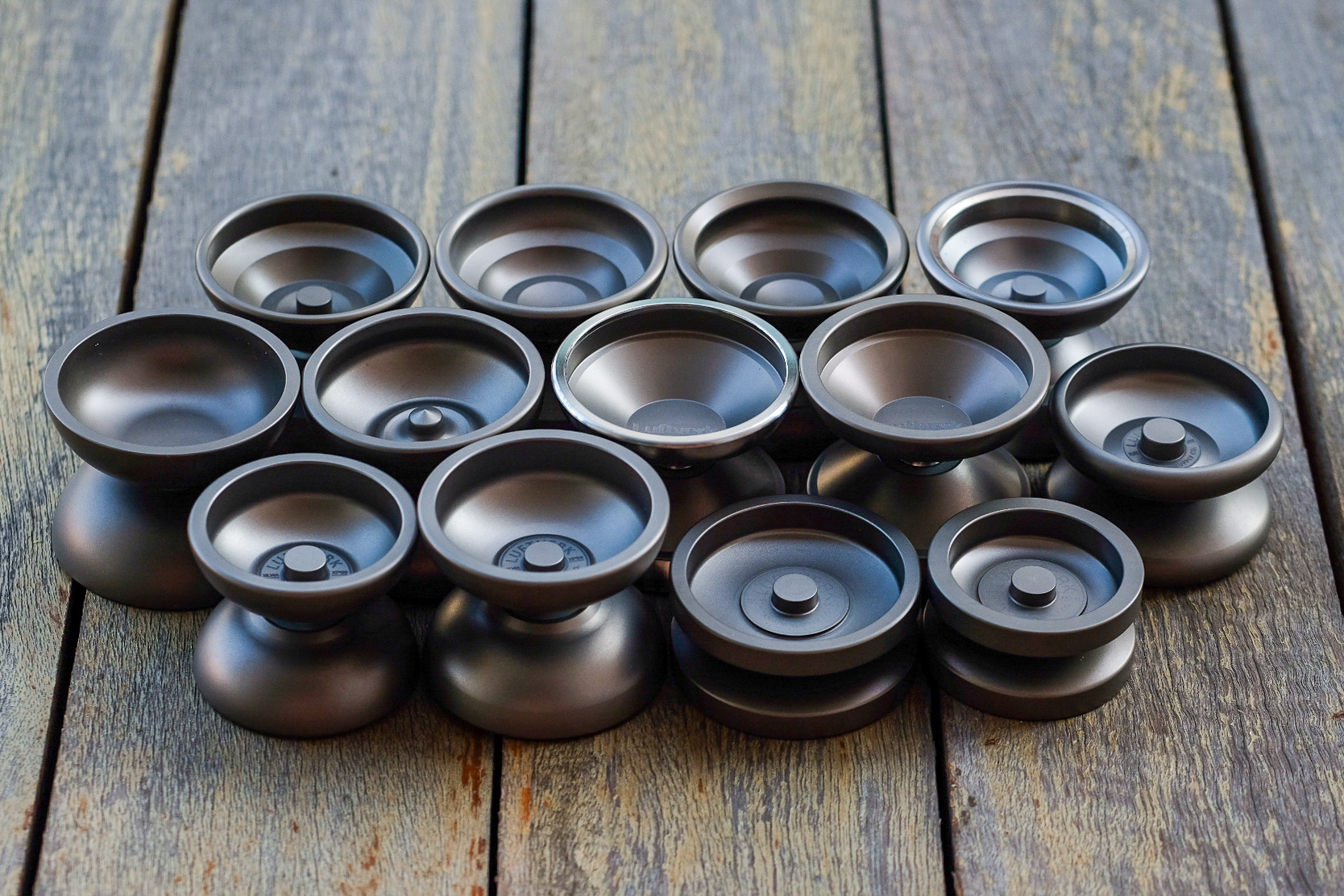
Improvements in computer-aided design and manufacturing transformed the industry again. Competition-oriented yo-yos adopted lower walls, wider V-shaped catch zones and increasingly deliberate weight distributions. These changes supported faster play, greater stability and longer spin times.
The Yoyorecreation Draupnir became one of the defining examples of this period, pairing a high-performance aluminium body with stainless-steel rims.
Bimetal construction soon became more common. Titanium, stainless steel, brass and other materials created further possibilities, while increasingly complex anodizing and finishing techniques turned production into a greater technical and financial undertaking.

DRAUPNIR
The yo-yo was no longer simply machined into shape. Its material, construction and finish could each change how it looked, sounded and moved. That expanding design vocabulary eventually made RSO possible.
AMS 2488

BLACK BIP BOP
YO-YO COMMUNITY
Although I attended the Asia Pacific Yo-Yo Championships intermittently, the 2015 World Yo-Yo Contest in Tokyo was my first overseas competition. It was an eye-opening experience. I finally met André Boulay of YoYoExpert and Hishida Masanobu of SpinGear, two people who had been fulfilling my international yo-yo orders for years. Meeting the people behind familiar stores and brands made the global community feel considerably smaller.


In 2016, I travelled to Berlin and attended a local gathering where I met Dave Geigle of iYoYo. His hospitality left a lasting impression.
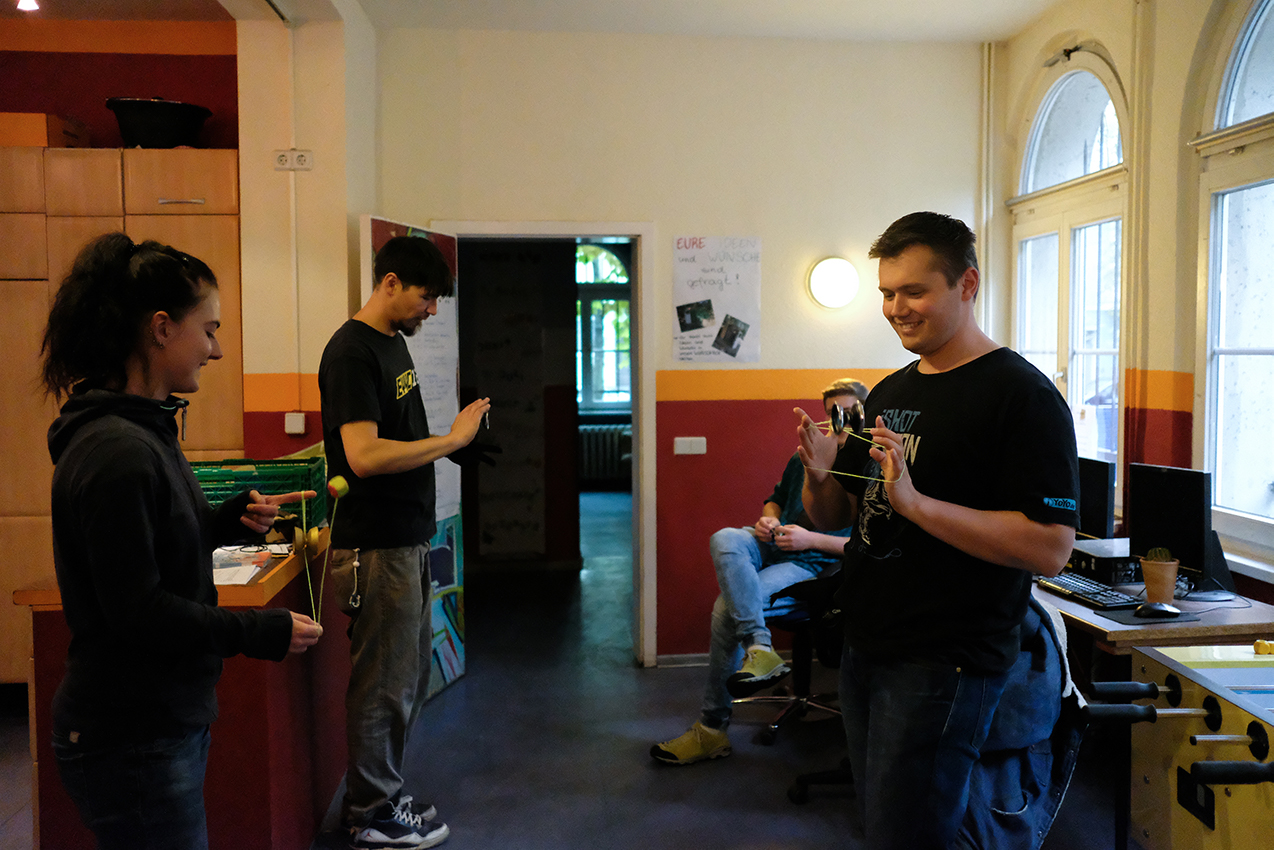

Two years later, I travelled to Shenzhen to finalize Bowl 7068 with Fenghuida Precision Machining. The trip provided my first opportunity to meet the FPM team and better understand the people and processes behind the machining. It was also an exhausting journey for my wife, who was nearly six months pregnant at the time.

These encounters shaped how RSO approaches collaboration. A yo-yo may begin as a CAD file, but it reaches production through relationships between designers, machinists, artists, retailers, players and collectors. The community is part of every release.
WHAT I DO
Outside RSO, I work as a consultant radiologist in Singapore, with subspecialty interests in body imaging and vascular and interventional radiology. Interventional radiology uses imaging technologies - including ultrasound, fluoroscopy, computed tomography and digital subtraction angiography-to guide minimally invasive diagnostic and therapeutic procedures.
Medicine and yo-yo design may appear unrelated, but both demand precision, spatial understanding and careful planning. Small decisions can have significant consequences, and the best result often depends on understanding what lies beneath the surface. RSO provides a different creative outlet from hospital work, but the same attention to detail inevitably follows me home.
My current professional profile is available here.

FAMILY, LOVE
My wife, Hui Wen, and I were married on 16 October 2016. Her support has made both my medical career and RSO possible. She understands that the brand was never created primarily as a commercial venture. It is a personal project that gives me room to design, collaborate and remain connected to the hobby that has accompanied me since childhood.
Our elder son, Isaac Lim, was born on 21 February 2019. Our younger son, Isaiah Lim, followed on 2 March 2022. Both have become part of the visual history of RSO. They appear throughout its artwork, photographs and stories, turning releases into records of our family as much as records of yo-yo design. RSO has grown alongside them.

WHY RSO EXISTS
I began as a collector fascinated by the objects, personalities and ideas that shaped modern yo-yo history.
RSO became my way of contributing something of my own. Every release brings together the influences I grew up admiring with the people and experiences that now define my life. The yo-yos are designed between hospital work and family time, then completed with the help of machinists, artists, retailers, collaborators and collectors around the world. That is why their stories matter.
RSO is not separate from my collection, career, community or family. It exists at the point where all of them meet. It is my way of returning something to the community that first set me spinning.